 English
 Português
This article shares reflections and personal experiences. It is not health advice.
In this article
This text is for information only. It is not medical advice and does not replace an assessment by a health professional.
Why midlife is a turning point
According to the World Health Organization, regular physical activity is associated with better heart health, mood, sleep and weight management, and with reduced risk of several chronic conditions. The NHS physical activity guidelines for adults describe a combination of aerobic activity and muscle-strengthening exercise on at least two days a week.
Around menopause, oestrogen levels fall, and this is commonly described as one factor in faster loss of bone density and changes in muscle mass. Strength training is often explained as a form of loading that signals the body to maintain muscle and bone. The precise size of the effect varies between individuals and depends on many factors.
What research describes about barriers
A UK study of women moving through menopause (Niven et al., Menopause, 2026) reported that participants described heat that worsened with exercise, joint soreness, tiredness, body-image worries and loss of motivation. The same participants also described groups of friends and a simple routine, such as short bedtime yoga, as things that made activity easier to sustain. These are reported experiences, not prescriptions.
"Lifting weights will make women bulky, and it is too late to start after 40."
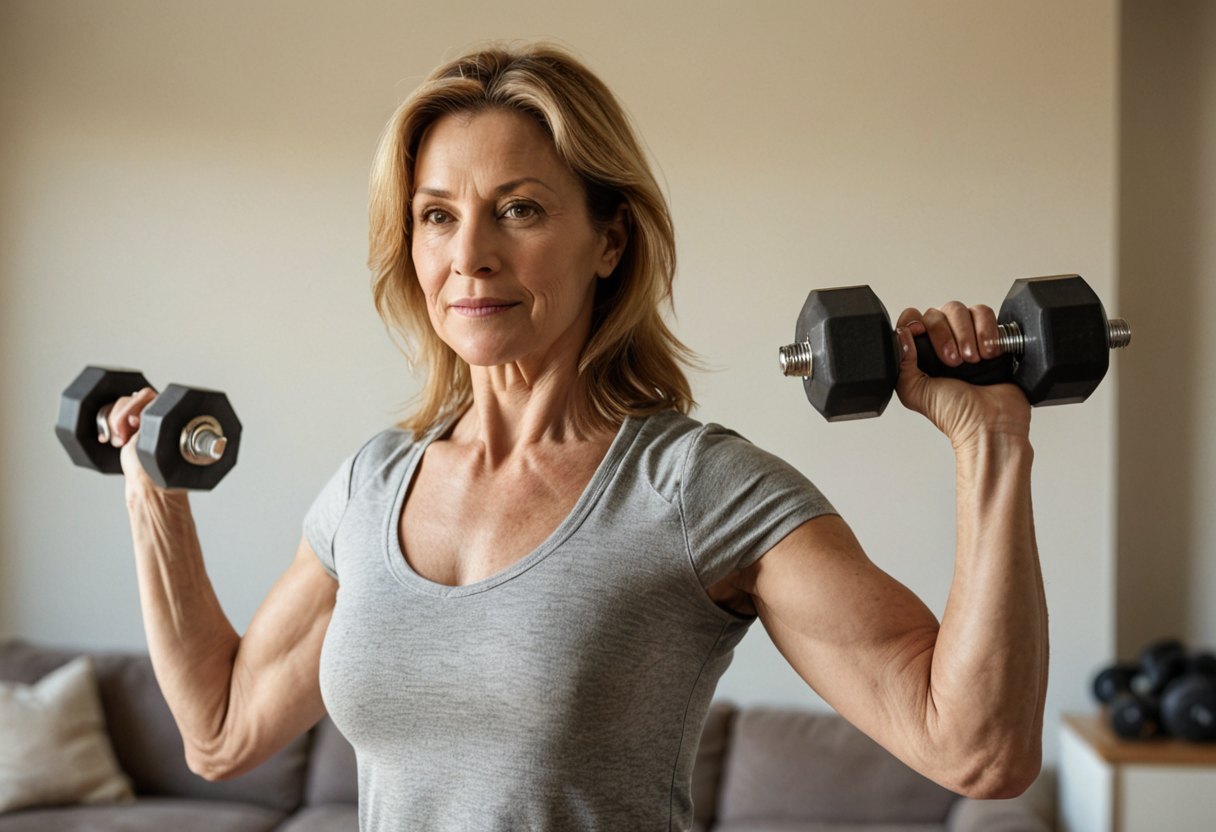
Strength training in midlife is generally described as building functional strength and supporting bone health, and most women do not develop a bulky appearance from it. Public health sources note that people can become more active at any age.
What women tell us
Personal experiences, shared to help you feel less alone. They are not health advice.
But the other thing I get; I find the heat affects me much more with exercise.
I’ve got a made a couple of groups of friends that I do physical exercise with or have done in the past that has made it fun.
I ache and I feel old, and I can’t move, and I’m not me

How a mixed routine is usually structured
Public guidance typically describes three components. Aerobic activity, such as walking, swimming or cycling, is measured in minutes per week and built up gradually. Muscle-strengthening work, such as sit-to-stand movements, wall push-ups, step-ups or light weights, is usually described as two sessions a week, with attention to technique. Balance and mobility work, such as standing on one leg or gentle yoga, is often included for older adults. Recovery and sleep are commonly described as part of the picture rather than an afterthought.
Heat, joints and energy: what is known
Research on menopause and exercise describes heat intolerance as a common experience; cooler times of day, breathable clothing, water and cooler environments are frequently mentioned in the literature as practical adaptations. Low-impact options are often discussed in relation to joint discomfort, and persistent pain is generally described as a reason to involve a health professional. Fatigue is reported by many women in midlife, and severe or unexplained exhaustion is commonly listed among symptoms that warrant medical assessment.
Protein and muscle maintenance
Protein is widely described as important for muscle maintenance, and its role alongside strength training is a common theme in nutrition literature. Requirements vary with body weight, health conditions, appetite and kidney function, and dietitians are the professionals who assess individual needs. General population guidance from public health bodies describes balanced eating rather than specific targets for midlife women.
A common scenario (illustrative)
Consider a woman who stopped exercising when hot flashes made workouts unpleasant. She moves her activity to cooler morning hours, adds two short strength sessions at home and walks with a friend. After some months she reports feeling stronger and sleeping better. This is an illustrative example, not a real account.
Chest pain, severe breathlessness, fainting or sudden dizziness during activity are described in medical sources as reasons to seek urgent care. People with heart or other health conditions are generally advised to consult a doctor before starting a new exercise programme.
When a professional is involved
Several kinds of professionals work with midlife health and activity. General practitioners assess symptoms and medical conditions and can refer onward. Physiotherapists work with joint and movement problems. Dietitians assess nutritional needs, including protein. Menopause specialists and gynaecologists address hormonal questions, and the British Menopause Society and NICE guidance describe the range of options discussed in clinical settings. These professionals provide individual assessment; public sources describe general principles only.
References
- NHS. Physical activity guidelines for adults. nhs.uk
- World Health Organization. Physical activity. who.int
- NICE. Menopause: diagnosis and management. nice.org.uk
- British Menopause Society. thebms.org.uk
Frequently asked questions
How much exercise do public guidelines describe for adults?
The NHS guidelines for adults describe regular aerobic activity plus muscle-strengthening exercise on at least two days a week, built up gradually over time.
Is walking alone considered enough?
Walking is widely described as valuable aerobic activity, and public guidance usually pairs it with strength and balance work rather than presenting it as a complete programme on its own.
What does research say about menopause and exercise?
Studies describe heat, joint soreness, fatigue and motivation as common barriers, and also describe social support and simple routines as factors women associate with continuing activity.
Is hormone therapy relevant to exercise?
Hormone therapy is a medical topic addressed in NICE menopause guidance and by menopause specialists; research describes some women reporting changes in symptoms, and decisions about it sit with clinicians and patients.
What is known about protein needs in midlife?
Protein is commonly described as supporting muscle maintenance, particularly alongside strength training; individual amounts depend on health, weight and kidney function and are assessed by dietitians. ---
Most relevant for: in your 40sin your 50sin your 60s